How To Fund a Life of World Travel
Updated: Dec 10, 2025
And what we learned about funding a dream that doesn’t fit inside a normal life
How We Paid For Seventeen Years On The Road
People often ask how we afforded to travel for so long. They ask it quietly, as if money is the one part of the story they’re not supposed to bring up. But it’s a fair question. It’s also the part no one really explains. So here it is — the real version. Not the romantic one. Not the “inspirational quote” one. Just how it actually worked, what we got wrong, and what we’d do again.
And maybe, somewhere in here, there’s something you can use for your own journey. If you've always wondered How To Fund a Life of World Travel, then this read is for you.

When the savings ran out
Before we ever left the UK, Lisa and I did what most people do: we worked, saved, and told ourselves we were preparing. The money we’d put aside wasn’t glamorous or strategic — it was the product of long days and a lot of self-discipline. We figured it would last a while. It lasted a few years.
By the time the last of those pounds slipped through our fingers, we’d already changed. The world had got under our skin. We weren’t ready to turn around and go home, even though logic said we probably should.
So we made a choice. A big one. We sold everything we had left in the UK — furniture, clothes, jewellery. And then we sold the house. That part gutted us a little. A home is more than bricks. It’s a quiet kind of security. Once it was gone, we were officially nomads. Scared, yes. But free in a way we hadn’t expected.
That money kept us going for years. A decade later, it too was gone. And that’s when the real education began.
How To Fund a Life of World Travel - THE REAL DEAL!
The truth: most people are struggling, just in different directions
Some people want a faster car or a new watch. We wanted a few more miles and one more border. It’s the same desire, just aimed somewhere else.
Money is the constant pressure in long-term travel. You learn to live with it. You learn to stretch it. And eventually, you learn to make peace with the fact it will never feel “sorted.” If you’re expecting a travel lifestyle to magically erase financial stress, it won’t. It just trades one version of stress for another. But it’s ours. And we chose it. That helps.
The uncomfortable question: “How do you fund it?”
Most people who ask assume the answer is glamorous — big sponsors, secret income streams, magical opportunities that appear once you post enough sunsets on Instagram.
The truth is duller and harder. We support ourselves. All of the equipment sponsorships people see today came long after the first years on the road, and none of them pay our bills. They help with gear, not fuel or daily living expenses.
Our income is a patchwork of small things: occasional magazine articles, selling photos, bits of online work, design projects, and random jobs we pick up along the way. None of it is predictable. Most of it arrives in small doses. You learn to catch every drop.
Travel slowly, and those drops stretch further than you think. Rush, and the money disappears.
Why travelling slowly saves you
People assume fast travel is efficient. It’s not, it's actually expensive. Speed demands convenience, and convenience is what you pay for. Repairs done quickly cost more. Shortcuts cost more. Accommodation that saves time costs more. And if you’re rushing because you’ve set a tight schedule, that schedule becomes another bill.

We move slowly. More time in a place means fewer surprises. It also means markets instead of restaurants, camping instead of hotels, and using your own hands instead of someone else’s service department.
Most nights we’ve slept in a tent — around 80 percent of the time of our 17-years on the road. It isn’t glamorous, but it buys us the one thing we value most: distance. More road. More stories. More experiences.
Sponsorship: what it is and what it isn’t
People love the idea of sponsorship. They imagine it as a golden ticket. It isn’t. Not even close.
In the beginning we rode five years without a single sponsor. No company was interested in a couple from Wales trying to ride around the world. Why would they be? Companies are flooded with requests: expeditions, charity rides, cool projects, emotional stories. Everyone wants something.
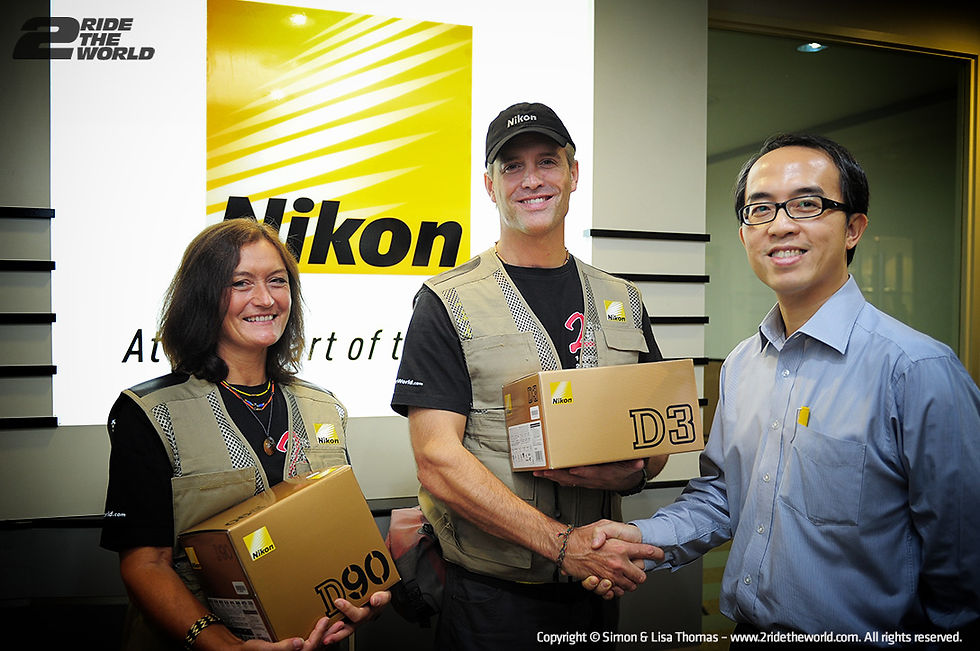
So if you want to approach sponsors, here’s what we learned the hard way:
You need a real angle Not a vague “this will inspire people” sentiment. A clear reason why your journey is different and why anyone should care. Most journeys aren’t. That’s fine. You just have to be honest about what you bring.
You must present yourself professionally A phone call won’t cut it. A sloppy email won’t cut it. Busy people want specifics: What exactly are you asking for? What exactly will they get? What media exposure can you prove — not hope for? Hope doesn’t sell anything.
Never overpromise Companies get burned all the time. They hand over gear or money and never hear from the traveller again. That’s why so many default to “no.” If you do get support — any support — honour it. Deliver what you promised. Otherwise you’re not only hurting yourself, you’re making it harder for the next person.
Don’t expect money Equipment support is far more realistic. Maybe a discount. Maybe a part. Cash? Almost unheard of. And even if a company has money, it doesn’t mean they’ll hand it over without a clear reason.
Show commitment before you ask One sponsor told us exactly why they chose to support us: “You bought our equipment before you ever contacted us. And when you approached us, you asked for a very specific item and explained why. You weren’t begging for freebies. You were serious.” That stuck with us.
Building a sponsor pack
If you’re serious about this, treat it like work. Create a small media kit with your story, your credentials, your skills, your reach, your hard numbers. Keep it short. People in marketing departments rarely have time for long reads. Produce it as a pdf document that you can email to prospective partners or sponsors.
Offer clear options — small, medium, large — so a company can match their comfort level. A local dealership won’t offer what a global brand can. Let them choose.
But more importantly, be sure you aren’t chasing sponsorship because it feels like validation. A free helmet doesn’t make your journey more meaningful.
The questions we get most often
We’re asked the same things every few weeks, so here are the honest answers:
Is it easy to get sponsors? Not even remotely. Most of our sponsorships came from face-to-face relationships built slowly over time. We didn’t ask for anything at first. We just met people, shared stories, and eventually someone saw value in what we were doing.
Are there downsides to being sponsored? Only if you let the sponsor 'own' your journey. We’ve been lucky. Our sponsors feel like friends. But we’ve seen travellers hand over their entire itinerary and lose control of their trip. Once your journey exists to serve someone else’s marketing, it’s no longer yours.
Is it hard to keep sponsors happy? Not if you were honest from the start. Problems happen when travellers overpromise, underdeliver, or disappear. Transparency solves most of it.
How did you survive financially for so long? We sold everything. Every single thing. No home, no car, no storage locker full of “just in case” items. Our lives fit on two motorcycles. It’s terrifying some days and liberating on others. It depends on the weather, the border, the engine noise, and whatever part of the world we’re waking up in.
We don’t do typical tourist activities. We couldn’t snorkel the Great Barrier Reef because that would have been fuel money. That’s the reality. You learn to make peace with those trade-offs.

Donations: nice when they happen, never expected
Along the way, strangers have surprised us with kindness — a meal, a place to stay, sometimes a small donation. It’s humbling. But you should never build a plan around generosity. People have their own dreams and their own financial stresses.
If you do set up a donation link, something simple like PayPal is enough. But treat anything that arrives as a gift, not income.
Earning online: the tiny drips that help
We’ve tried a lot of online avenues. Calendars. Photo sales. Small digital products. They don’t fund the trip, but they pay for the odd visa or small repair.

There are dozens of places to sell photos — SmugMug, Alamy, Shutterstock, iStock, Photoshelter. Each platform has its quirks and its own royalty structure. None of them will make you rich, but they can create a small trickle if you’re consistent.
And then there’s print-on-demand: mugs, cushions, phone cases, prints, rucksacks. Sites like Fine Art America, Zazzle, and Redbubble make it easy to experiment. Even if the income is tiny, it adds another thread to the rope.
The truth is simple: online revenue takes time. But travellers collect something valuable — stories, images, footage, perspective. Those things have worth. You just have to learn how to package them.
If you need a little inspiration then checkout a few of the links below to see how we're doing it.
👉 2 Ride The World - Online Print Gallery & Photo Service Perfect for personal and commercial needs.
Skills become income
Neither of us started this journey as a photographer. Not really. I had never owned a camera. We learned because we had to — and because we wanted to get better at capturing the world we were living in.
Over the years we became professional photographers. We learned to build websites. I learned design. Those skills turned into client work, which turned into occasional lifelines when we needed them most.
The road teaches you more than you expect. The trick is paying attention.
👉 You can check out my work under 'NOMADIC graphics here: NOMADIC graphics
Today, I've feel lucky to have worked with incredible brands around the world. Here's a glimpse of some of the Logo and Brand design work I've produced.
The honest summary
Funding a long-term journey isn’t magic. It’s a long list of small decisions: what you’re willing to sacrifice, how slowly you’re willing to move, what skills you’re willing to learn, and how honest you’re willing to be about what you want.
Travel doesn’t erase money problems. It just shifts them. But if the trade-off is worth it — if the road gives you something your old life couldn’t — then the effort makes sense.
We’ve paid for our miles with savings, fear, luck, stubbornness, late-night work, side projects, photography, and the occasional miracle. It’s messy. But it’s ours.
And if you’re dreaming of doing something similar, the truth is you probably can. Not easily. Not quickly. But with a few sacrifices, a slow pace, and a bit of creativity, it’s more possible than it looks from the outside.
The world is still out there. And the road, for all its challenges, still feels like home.
Hashtags:
Hard won truth. These are the realities of long term travel. Sacrifice and determination above all else! Well done for keeping it all going